Flying Blue Miles Calculator: How Much Will You Earn on Air France and KLM?
Flying Blue works differently from most loyalty programs — your miles are based on what you spend, not how far you fly. Here's exactly how the earning formula works, what elite status adds on top, and how partner flights are calculated differently.
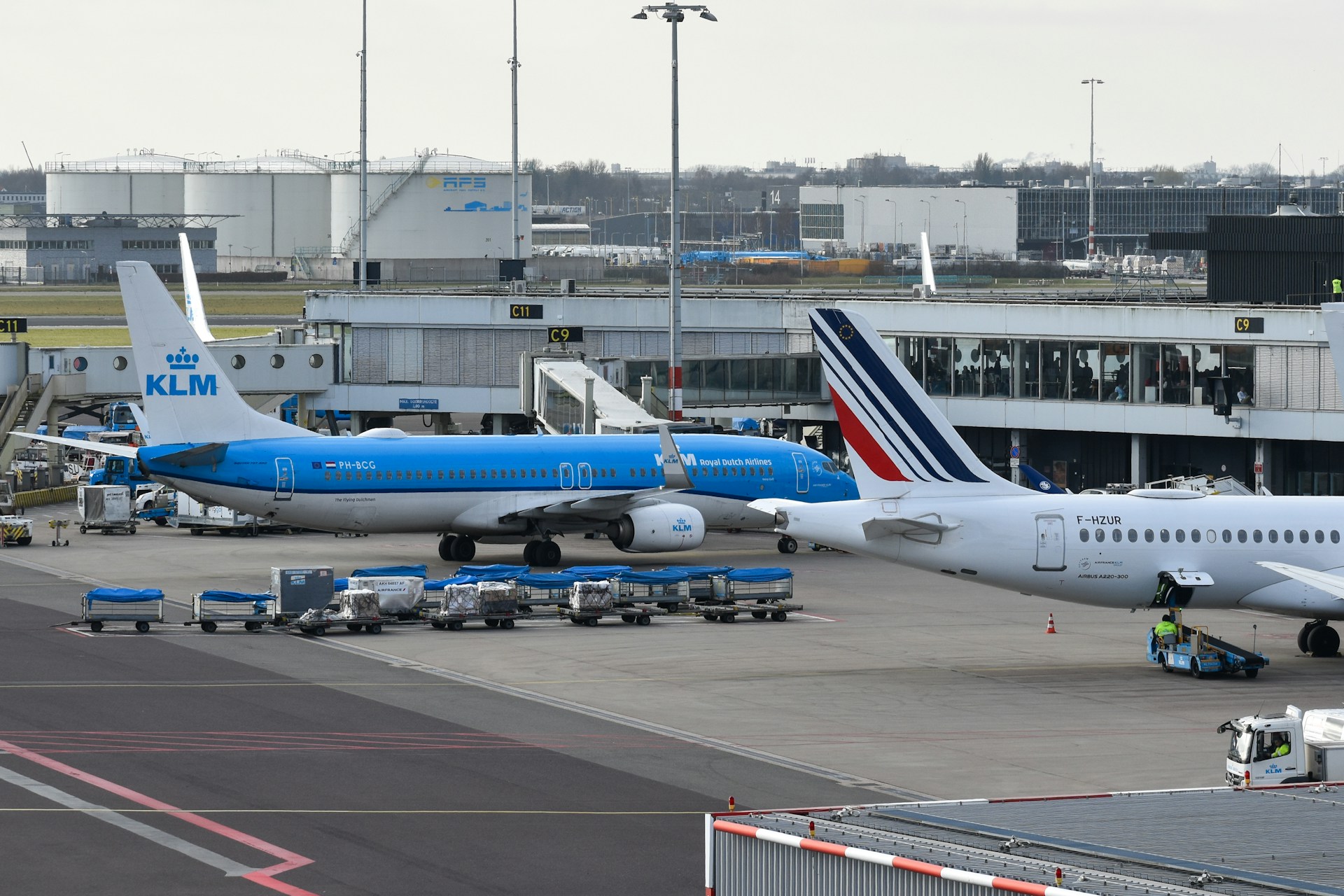
What is Flying Blue?
Flying Blue is the joint loyalty programme of Air France and KLM, two of Europe's largest airlines. Both are part of the SkyTeam alliance, which means you can also earn and spend Flying Blue miles with around 19 partner airlines including Delta, Korean Air, and Virgin Atlantic.
It's a popular choice for European-based travellers and anyone who regularly flies through Paris Charles de Gaulle or Amsterdam Schiphol. One of its biggest selling points is how easy it is to build up miles without flying at all — Flying Blue connects to virtually every major credit card rewards programme, including American Express Membership Rewards, Chase Ultimate Rewards, Citi ThankYou Points, Capital One Miles, and Bilt.
But before you can make smart decisions about the programme, you need to understand how it calculates your miles. And it does things quite differently from programmes like British Airways Avios or Lufthansa Miles & More.
How Flying Blue calculates miles on Air France and KLM flights
When you fly on a ticket issued by Air France or KLM, your miles are based on the fare you paid in euros, excluding government taxes and fees. This is called a revenue-based earning model — the more you spend on the ticket, the more miles you earn.
The formula is simple:
So if you pay €300 for an Air France economy ticket (after excluding taxes), and you're an Explorer member, you'd earn 300 × 4 = 1,200 miles.
This is worth understanding clearly: it doesn't matter if you're flying Paris to Amsterdam (a 45-minute hop) or Paris to Singapore (13 hours). What matters is the euro amount on your ticket. A €600 business class fare earns more miles than a €150 economy fare, regardless of the route distance.
Miles per euro by elite status tier
Your earning rate increases with your status level. Flying Blue has five tiers, though for most travellers the relevant ones are Explorer through Platinum.
| Status tier | Miles per € spent | XP required |
|---|---|---|
| Explorer (no status) | 4 miles / €1 | — |
| Silver | 6 miles / €1 | 100 XP |
| Gold | 7 miles / €1 | 180 XP |
| Platinum | 8 miles / €1 | 300 XP |
| Ultimate | 9 miles / €1 | 900 UXP (Air France/KLM only) |
To put this into perspective: a Platinum member earns twice as many miles from the same ticket as an Explorer member. If you're a frequent Air France or KLM flyer, chasing Silver status (100 XP) is often worth it purely for the earning uplift — you jump from 4 to 6 miles per euro, a 50% increase overnight.
One important nuance: the miles-per-euro rate applies to the ticket fare and eligible extras like seat upgrades and additional baggage fees. It does not include government taxes and airport charges, which are separated out during booking.
What are XP points and how do they differ from miles?
Flying Blue uses two separate currencies, and this confuses a lot of new members. It's worth getting clear on both before you start flying.
Miles are the currency you spend. You redeem them for award flights, upgrades, extra baggage, and more. Miles are earned based on fare spend as described above.
XP (Experience Points) are the currency that determines your status tier. XP is earned based on the distance of your flights and the cabin you travel in — not the fare. A short-haul economy flight earns fewer XP than a long-haul business class flight, regardless of cost. XP resets annually, though up to 300 XP rolls over to the following year.
This split matters because it means you can earn lots of miles by buying expensive tickets, but earning status requires actually flying in premium cabins or taking long-haul routes. The two are connected but separate.
Try it for your flight
Calculate your Flying Blue miles instantly
Enter your route, fare, and status tier — MilePilot shows your exact miles across all programmes including Flying Blue.
Open Calculator →How partner flight earning works (and why it's different)
Here's where things change. When you fly with a SkyTeam partner airline — Delta, Korean Air, Kenya Airways, and others — on a ticket not issued by Air France or KLM, the earning formula switches from fare-based to distance-based.
In this case, your miles are calculated as:
The booking class percentage varies by airline and by the specific fare class letter on your ticket (the single letter you'll find in your booking confirmation — Y, B, M, H, K, and so on). Higher fare classes in premium cabins earn a higher percentage; discounted economy fares may earn as little as 25–50% of miles flown.
This is why, when flying a SkyTeam partner, the booking class on your ticket genuinely matters. Two passengers in economy on the same flight can earn very different numbers of miles depending on whether they bought a flexible fare or the cheapest available ticket.
For the exact percentage that applies to each booking class on each partner airline, the official Flying Blue partner pages list every rate. MilePilot also calculates this for you automatically — just select Flying Blue as your programme and the partner airline, and the correct multiplier is applied.
Elite status bonuses on partner flights
If you hold Flying Blue Silver, Gold, or Platinum status, you receive a bonus on top of the base partner earning rate. The bonus percentage depends on the airline and your status tier — typically ranging from 25% extra for Silver to 100% extra for Platinum members.
One important caveat: XP points are generally only earned on Air France and KLM-marketed flights, and since April 2024 most non-SkyTeam partner flights no longer earn XP at all. So if your goal is to build status, focus on Air France and KLM flights where possible. If you're just accumulating redeemable miles, partner flights can be a fine option.
Flying Blue miles expiry — and the important 2026 change
Flying Blue miles expire after 24 months of inactivity. However, the programme is introducing a significant simplification on 4 May 2026 that is worth knowing about.
Under the old rules, miles were split into two categories — flight miles and partner miles — each with their own expiry clock, and certain activities only extended one type. This caused confusion and led to members accidentally losing balances they thought were protected.
From 4 May 2026, all miles share a single 24-month expiry date. Any eligible earning activity — a flight, a hotel stay, a car rental, a credit card transfer, shopping through the Flying Blue portal — resets the clock on your entire balance. One action, one date, no more juggling.
Elite members (Silver and above) already enjoy miles that never expire while they hold status. That doesn't change.
The practical upshot: as long as you do something with your account every two years — even transferring a small number of credit card points — your entire balance stays safe.
A worked example: Paris to New York, Gold status
Let's make this concrete. Suppose you're flying Air France from Paris Charles de Gaulle to New York JFK in economy. You've paid €420 for your ticket, of which €380 is the base fare (the remainder is taxes). You hold Flying Blue Gold status.
The calculation is straightforward: €380 × 7 miles per euro = 2,660 miles.
If you were an Explorer member with no status, the same ticket would earn: €380 × 4 miles per euro = 1,520 miles.
The difference — 1,140 miles — comes purely from your elite tier. Over a year of regular flying, that gap adds up considerably.
Now suppose you fly the same route but on a Delta-operated, Delta-ticketed flight (not Air France-issued), and you want to credit those miles to Flying Blue. In this case, Flying Blue would calculate your miles based on the JFK–CDG distance (roughly 5,840 kilometres) multiplied by the percentage for your Delta booking class, plus your Gold status bonus. A high Y-class economy fare might earn 100% of miles flown; a discounted L-class fare might earn 50%. The exact rate is published on Flying Blue's Delta partner page.
Tips for earning more Flying Blue miles per flight
A few practical points that make a real difference.
Book directly through Air France or KLM where possible. Revenue-based earning only applies to Air France and KLM-issued tickets. If you book the same flight through a third-party and the ticket number starts with a different airline code, your earning may be calculated differently.
Check whether extras earn miles. On Air France and KLM tickets, eligible ancillaries — paid seat selection, prepaid baggage, and some upgrades — also count towards your mile-earning fare. Small amounts, but they add up over time.
Pay attention to booking class on partner flights. When flying a SkyTeam partner and crediting to Flying Blue, the single fare class letter on your ticket determines your earning percentage. It's worth checking the earning table before booking if you have fare class flexibility.
Watch for Promo Rewards. Flying Blue publishes discounted redemption rates on select routes each month, typically on the first of the month. While this is about spending rather than earning, knowing the programme's best redemption windows helps you decide when it's worth stacking miles versus spending them.
Ready to calculate?
See exactly what your next flight earns
MilePilot supports Flying Blue across Air France, KLM, and all SkyTeam partner airlines — with elite status bonuses built in.
Open Calculator →The bottom line
Flying Blue is a genuinely strong programme for European-based travellers, particularly those who fly Air France or KLM regularly or hold transferable credit card points. The revenue-based earning model on Air France and KLM flights rewards higher spenders more than distance-flyers — which suits business travellers well, but means budget economy fares earn modestly.
The key things to remember: your miles on Air France and KLM flights are based on the fare in euros, not the distance. On partner flights, distance and booking class take over. Elite status meaningfully increases your earning rate. And from May 2026, the programme's expiry rules become considerably simpler and more forgiving.
If you want to see exactly what any specific flight will earn — with your status tier applied and all the partner booking class rules calculated automatically — the MilePilot calculator handles all of it in a few seconds.