KrisFlyer Miles Calculator: How Much Will You Earn on Singapore Airlines?
KrisFlyer is one of Asia's most coveted loyalty programmes — but earning rates vary enormously depending on which booking class is on your ticket. Here's exactly how the maths works, with real examples across economy, premium economy, and business class.
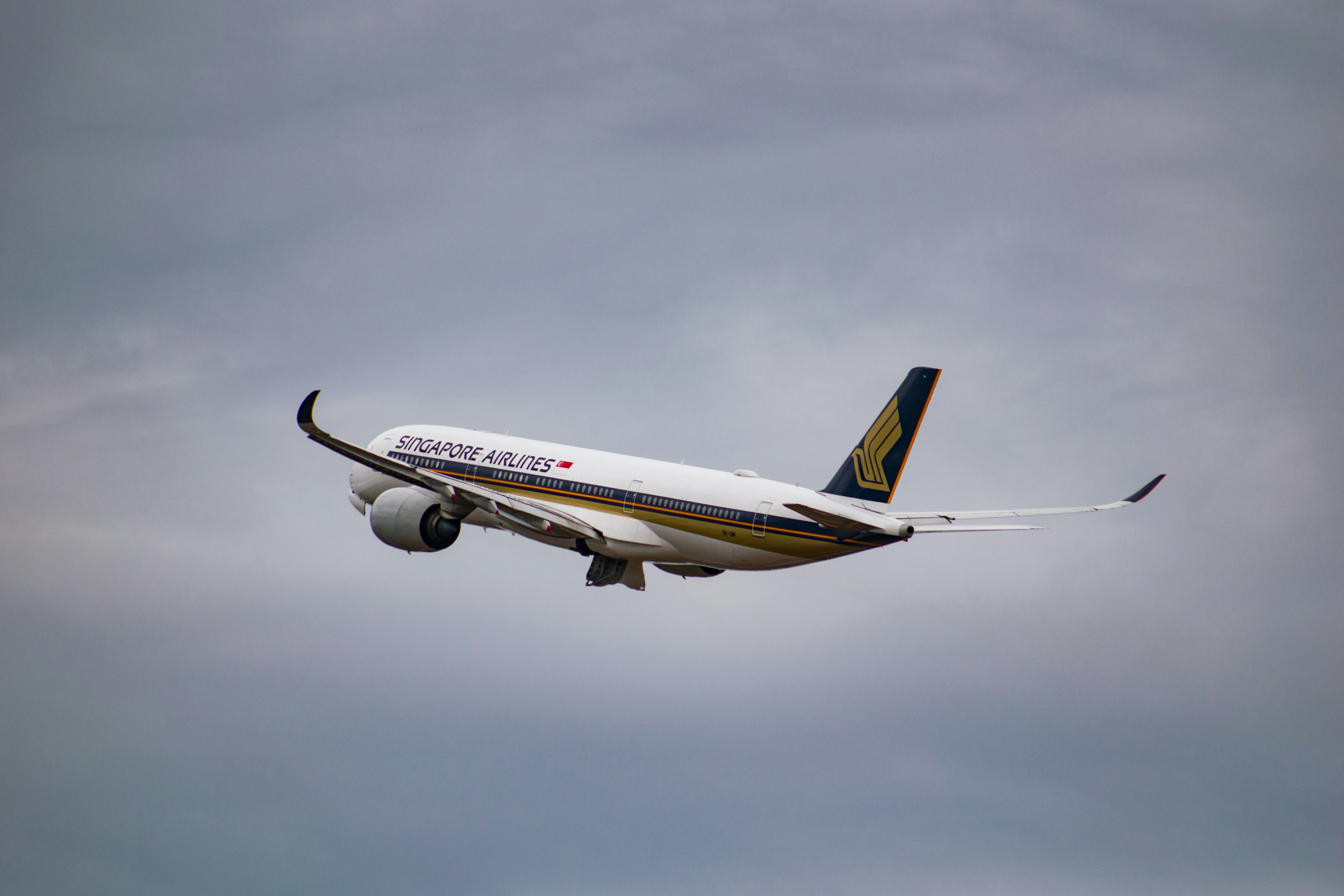
What is KrisFlyer?
KrisFlyer is the frequent flyer programme of Singapore Airlines, consistently ranked among the world's best airlines. Members earn miles when flying on Singapore Airlines itself, on budget carrier Scoot, across the full Star Alliance network, and with a range of non-alliance partners including Lufthansa, Swiss, and United Airlines.
Beyond flights, KrisFlyer also has extensive ground-based earning through hotel partners, credit card transfers, dining, and the Kris+ lifestyle app. But for most members, the bulk of their miles come from flights — and that's where understanding booking classes makes a significant difference to how many you'll accumulate.
The programme has two elite tiers — KrisFlyer Elite Silver and KrisFlyer Elite Gold — each requiring 25,000 and 50,000 elite miles respectively within a 12-month period. There is also the PPS Club, a separate premium tier for high-spending business and first class travellers. Each tier delivers a 25% bonus on top of your base mile earnings for eligible Singapore Airlines flights.
How KrisFlyer calculates your miles: distance × multiplier
Unlike revenue-based programmes such as Flying Blue or British Airways Avios — where your miles depend on how much you paid for the ticket — KrisFlyer uses a distance-based model. The formula is straightforward:
The flight distance is fixed — it's the great-circle distance between the two airports. What changes is the multiplier, which is set by the booking class letter on your ticket. Buy the same seat on the same flight at different prices and you may end up in a different booking class, which directly changes how many miles you earn.
This is why two passengers sitting side by side in economy can walk off the plane with very different mile totals. If one booked early at a promotional fare (booking class Q or N) and the other bought a flexible ticket (booking class Y), the difference can be two-to-one or greater.
Singapore Airlines booking class multipliers
Here are the official earning rates for flights on Singapore Airlines own metal, sourced directly from the Singapore Airlines KrisFlyer accrual chart:
Suites and First Class
| Booking classes | Multiplier | What this means |
|---|---|---|
| A, F | 200% | Double the flight distance in miles |
Business Class
| Booking classes | Multiplier |
|---|---|
| C, J, Z | 150% |
| D, U | 125% |
Premium Economy
| Booking classes | Multiplier |
|---|---|
| S, T | 100% |
| R, L, P | 100% |
Economy Class
| Booking classes | Multiplier |
|---|---|
| B, E, Y | 100% |
| H, M, W | 75% |
| K, N, Q, V, G | 50% |
Notice that economy class alone spans from 50% to 100% — a 2× difference depending solely on which fare bucket your ticket falls into. This is the single biggest variable most travellers overlook when comparing loyalty programme value.
Real earning examples: Singapore to London
Singapore (SIN) to London Heathrow (LHR) is approximately 6,764 miles. Let's run through what a KrisFlyer member actually earns across the cabin classes on this route:
| Cabin | Booking class | Multiplier | Miles earned (base) | Miles with Elite Silver/Gold (+25%) |
|---|---|---|---|---|
| Suites | F | 200% | 13,528 | 16,910 |
| Business | J | 150% | 10,146 | 12,683 |
| Business (discounted) | D | 125% | 8,455 | 10,569 |
| Premium Economy | S | 100% | 6,764 | 8,455 |
| Economy (flexible) | Y | 100% | 6,764 | 8,455 |
| Economy (standard) | M | 75% | 5,073 | 6,341 |
| Economy (saver) | Q | 50% | 3,382 | 4,228 |
The range is striking. A Suites passenger earns more than four times the miles of someone in a saver economy fare — on the same flight, in the same air. And elite status adds a further 25% on top of any of these figures, which compounds nicely on long-haul routes.
Earning on a medium-haul route: Singapore to Tokyo
Not every KrisFlyer member is flying ultra-long-haul. Singapore (SIN) to Tokyo Narita (NRT) is approximately 3,333 miles — a popular business route across Asia. Here's how it looks:
| Booking class | Multiplier | Miles earned (base) |
|---|---|---|
| F (Suites/First) | 200% | 6,666 |
| J (Business) | 150% | 4,999 |
| Y (Economy flexible) | 100% | 3,333 |
| M (Economy standard) | 75% | 2,500 |
| Q (Economy saver) | 50% | 1,666 |
On this route, a business traveller flying in J class year-round would accumulate around 5,000 miles per leg. Return trips twice a month adds up to roughly 240,000 miles per year — more than enough for significant award redemptions.
Earning KrisFlyer miles on Star Alliance partners
One of KrisFlyer's major strengths is its Star Alliance membership, which means you can credit miles from nearly every major alliance carrier to your KrisFlyer account. Rates vary by airline and booking class, but here are a few popular partners worth knowing:
Lufthansa (and Lufthansa City)
Lufthansa earning rates for KrisFlyer mirror the structure of Singapore Airlines own metal almost exactly. First class (A, F) earns 200%, business class (C, D, J) earns 150%, and discounted business (Z, P) earns 125%. Economy ranges from 100% in full-fare Y down to 10% in the T class — the latter being Lufthansa's basic economy equivalent, where you earn almost nothing. If you're booking Lufthansa on a tight fare and want to earn KrisFlyer miles meaningfully, make sure you're not in T class.
United Airlines
United business class (C, D, J) earns 125% with KrisFlyer, dropping to 100% for P and Z fares. In economy, full-fare bookings (A, B, E, H, M, O, R, U, Y) earn 100%, but United's lower economy fares drop sharply: Q and V earn 75%, L, S, and T earn 50%, and G and K are down to 25%. The N class earns just 10%. For transatlantic United flights on a basic economy fare, KrisFlyer is largely not worth crediting to.
Swiss International Air Lines
Swiss follows the same earning structure as Lufthansa and Austrian Airlines — unsurprisingly, given they're all part of the Lufthansa Group. First class (A, F) earns 200%, business (C, D, J) earns 150%, and economy scales from 100% in B and Y class down to 10% in the T basic economy fare. As with Lufthansa, avoid crediting to KrisFlyer if you're flying Swiss in T class.
What about Scoot?
Singapore Airlines' budget subsidiary Scoot also participates in KrisFlyer, but at much lower earning rates. Business class on Scoot earns between 10% and 25% of flown miles depending on the booking class, and economy earns even less — 10% to 20%. If you're flying Scoot purely for miles, the accumulation will be modest. That said, for short-haul regional hops within Asia, even 10–20% adds up over time if you fly frequently.
Elite status: how the 25% bonus works
KrisFlyer offers two elite tiers — Elite Silver (25,000 elite miles per year) and Elite Gold (50,000 elite miles per year). Both tiers earn a flat 25% bonus on top of your base KrisFlyer miles for eligible flights on Singapore Airlines.
This bonus is applied after the booking class multiplier, not before. So on a Singapore–London J class flight:
- Base distance: 6,764 miles
- × 150% booking class multiplier = 10,146 base miles
- × 25% elite bonus = 2,537 bonus miles
- Total: 12,683 miles
The 25% bonus is consistent across both elite tiers — the difference between Silver and Gold lies in other benefits such as lounge access, upgrade priority, and seat selection, rather than miles earning rates. PPS Club members, Singapore Airlines' separate premium tier for premium cabin frequent flyers, also receive elite mile earning bonuses, but PPS Club status is tracked separately from KrisFlyer elite status.
How to check your booking class before you fly
Your booking class isn't always visible on the main booking screen — you often need to look at your e-ticket or booking confirmation. On Singapore Airlines bookings, it's usually shown in brackets next to the cabin name: "Economy Class (Q)" for example.
If you're booking through a third-party site or travel agent, ask specifically which booking class your ticket is in before confirming. On the same flight, fares in H class and Q class can sometimes cost a similar amount at the time of purchase — but H earns 75% and Q earns 50%, a meaningful difference on a long-haul route.
It's also worth knowing that codeshare bookings can be complicated. If you book a Singapore Airlines flight number but the plane is operated by a partner carrier, the earning rate is based on the operating airline's booking class, which may differ from what's shown on your ticket. The KrisFlyer accrual chart confirms that for codeshare flights, it's the operating carrier's booking class that determines your miles.
Calculate your KrisFlyer miles before you book
Rather than working through the tables manually every time, use the MilePilot calculator to see exactly how many KrisFlyer miles a specific flight will earn — including the effect of your booking class and elite status tier. The calculator covers Singapore Airlines own metal plus all partners in the KrisFlyer programme, using the official accrual rates sourced directly from Singapore Airlines.
Enter your route, select KrisFlyer as your programme, and choose your booking class to see your exact mile earnings.
Calculate KrisFlyer Miles →Is KrisFlyer worth it for your flying patterns?
KrisFlyer is an excellent choice if you fly Singapore Airlines regularly — the earning rates are generous, particularly in premium cabins, and the redemption sweet spots (especially to Europe and Australia in business class) offer outstanding value. The programme also benefits from being one of the most widely transferable points currencies in Asia-Pacific, with credit card transfer partners spanning American Express, Citibank, Chase, and many regional Asian banks.
If you're based in Europe or the Americas and only fly Singapore Airlines occasionally, KrisFlyer still makes sense as a crediting option for Star Alliance flights. Just pay close attention to booking classes: the same economy seat on Lufthansa or United can earn anywhere from 10% to 125% of the flown distance in KrisFlyer miles, and the difference between a full-fare and discounted booking class is rarely visible at the checkout stage.
The key habit is simple: always check the booking class on your ticket before you fly, and run it through the calculator to understand what you'll actually earn. Over the course of a year of regular flying, optimising your booking class choices — even within the same cabin — can add thousands of miles to your balance.